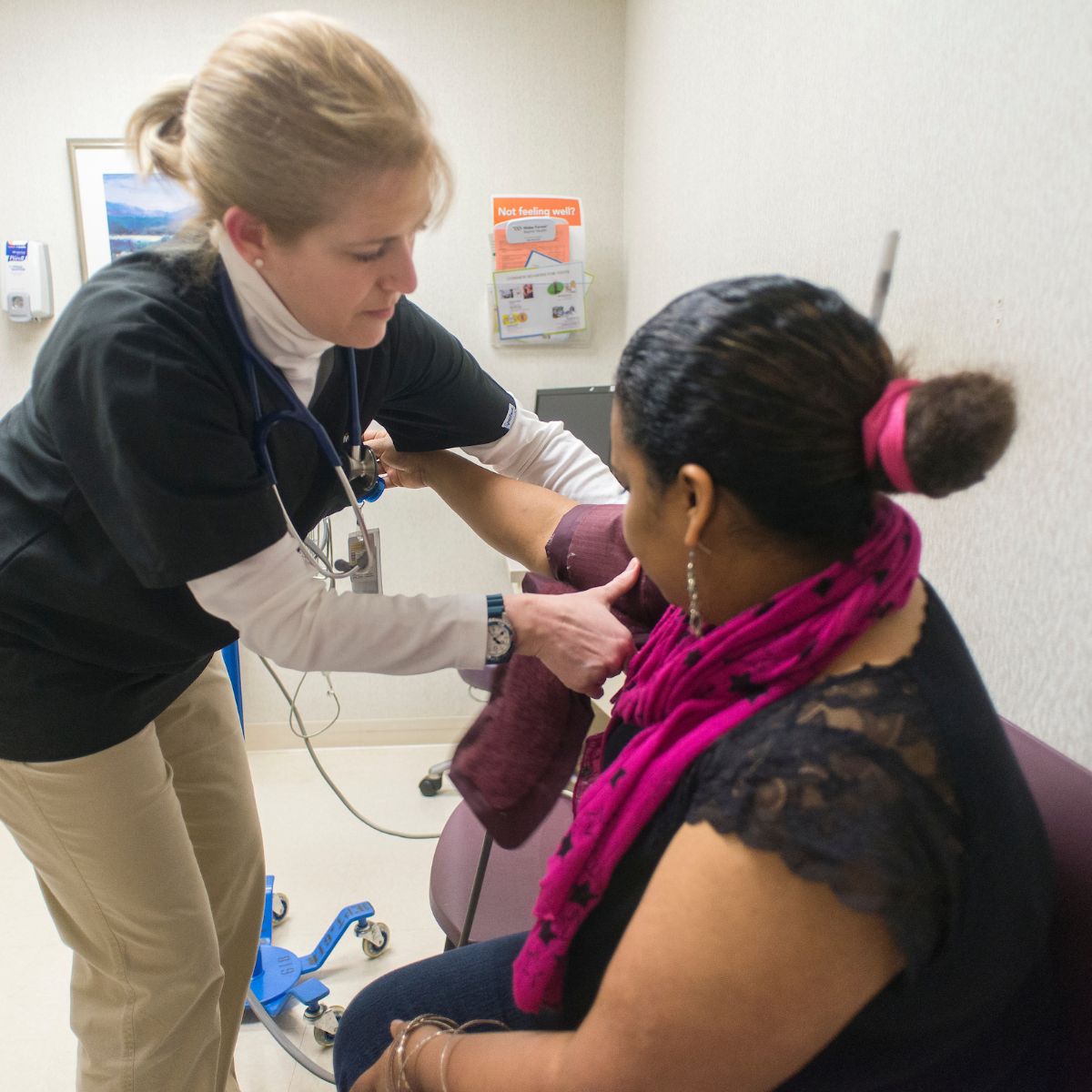
Hypertension
Blood pressure is measured by the force of blood against your artery walls as your heart pumps blood throughout your body. When the force is too high and it raises your blood pressure over the normal range (120/80), you get hypertension (high blood pressure).
High blood pressure is a long-term condition that can affect anyone at any age. It also increases your risk for serious conditions down the road like heart attacks and stroke.
We'll help you manage your symptoms and work with you to help get your blood pressure under control.
Need care? We're here for you.
Find a primary care provider for ongoing, personalized care. Choose from virtual and in-person options for every age.
A Breakdown of Blood Pressure Categories
When blood pressure is measured, it's given as a ratio of two numbers:
- Systolic blood pressure (first number)
- Diastolic blood pressure (second number)
Normal blood pressure sits at or slightly below 120/80 most of the time. Prehypertension is higher than 120/80 but below 140/90. Hypertension is when your blood pressure is consistently over 140/90.
If you have heart disease, kidney disease or a history of stroke, your doctor may recommend a lower blood pressure target than the one recommended for people without these conditions.
Causes, Risks Factors and Symptoms of High Blood Pressure
Your risk for hypertension increases as you age due to your blood vessels becoming stiffer, which, in turn, makes your heart work harder to pump blood throughout your body.
A variety of risk factors can increase your chances of developing hypertension:
- A family history of hypertension
- Diabetes
- Heavy alcohol consumption
- High levels of stress or anxiety
- High salt intake
- Hormone levels
- The amount of water and salt in your body
- The condition of your kidneys, nervous system or blood vessels
- Obesity
- Smoking
High blood pressure can increase your risk of stroke heart attack, heart failure, kidney disease and premature death. Your risk of developing this condition also increases if you're African American.
Hypertension Symptoms
Hypertension is often not identified until a routine checkup because most people don't have any symptoms. You may develop heart disease or kidney problems without realizing you have high blood pressure.
Symptoms often only occur with extremely high blood pressure. This condition, known as malignant hypertension, can be life-threatening. Malignant hypertension symptoms can include:
- Changes in your vision
- Confusion
- Nausea
- Nosebleeds
- Severe headaches
- Vomiting
Left untreated, malignant hypertension can cause severe damage to your vital organs and your small blood vessels. If you're experiencing any of the above symptoms, call 911 or seek medical help immediately.
Primary and Secondary Hypertension
High blood pressure is classified as primary or secondary hypertension. Primary hypertension does not have a specific cause. Secondary hypertension is linked to an underlying health condition (kidney disease, adrenal gland disorders, pregnancy, renal artery stenosis or hyperparathyroidism) or medication use (birth control, diet pills or cold medicine).
How High Blood Pressure Is Diagnosed
High blood pressure is often diagnosed after several readings from your provider. It's normal for your blood pressure to fluctuate, so your provider will do several readings. If your blood pressure is at a normal level (120/80) then you'll have your blood pressure checked every one or two years. If it's higher, your doctor may require you to measure it every year. Risk factors also play a role. If you're at a higher risk for developing hypertension, then your doctor might require more frequent blood pressure checks.
Treating High Blood Pressure
After a high blood pressure diagnosis, your provider will create a treatment plan to help lower your blood pressure. Lifestyle changes are likely to be part of a treatment plan:
- Adjusting your diet to include more potassium and fiber
- Limiting your alcohol consumption
- Making sure you’re drinking enough water
- Maintaining a healthy weight
- Prioritizing regular exercise
- Quitting smoking
- Reducing your sodium intake
- Reducing your stress levels
If lifestyle changes fail to keep your blood pressure at a healthy level, then your provider may turn to medications. There are multiple medication options for treating high blood pressure, and you'll most likely need to take two or more to lower your blood pressure.
Monitoring Your Blood Pressure at Home
Since blood pressure fluctuates so much and you often only get a professional reading once a year, monitoring your blood pressure at home is a great way to get a full picture of your blood pressure.
To monitor your blood pressure at home, follow these guidelines:
- Use a high-quality home blood pressure monitor with the correct cuff size and a clear digital readout.
- Bring your home monitor to your health care appointments so your provider can verify it’s working properly and you’re using it correctly.
For questions or to schedule an appointment, please call 478-743-9762