The Power of Colorectal Screening
What is Colon Cancer?
Colorectal cancer remains one of the most preventable yet deadly cancers in the United States. Most colorectal cancers start in the inner lining of the colon or rectum as a growth called a polyp.
Although polyps are common as patients age and most are benign or noncancerous, some types of polyps can change into cancer over time. The chance of a polyp turning into cancer depends on the type of polyp it is.
If cancer forms in a polyp, it may grow into the wall of the colon or rectum over time. Colorectal cancer starts in the innermost layer of the wall and can grow outward through some or all the layers. When these cancer cells get in the wall, they can grow into blood vessels or lymph vessels, and from there, they can travel to nearby lymph nodes or other parts of the body.
How Common is it Really?
According to the American Cancer Society, the number of young people being diagnosed every year continues to increase. The rate of people younger than 50 receiving diagnoses has increased by 2% annually. Now the suggested age for screening is 45 years of age.
Today, the American Cancer Society’s estimates for the number of colorectal cancers in the United States will be close to 158,850 new colorectal cancer cases annually.
The reality is, at age 45, many people feel healthy, and colorectal cancer often goes undetected as there are few early warning signs. Despite your activity level and diet, if you are 45 or older, it is time to begin screening for colorectal cancer.
Proud of Your Healthy Lifestyle? Still Get Screened.
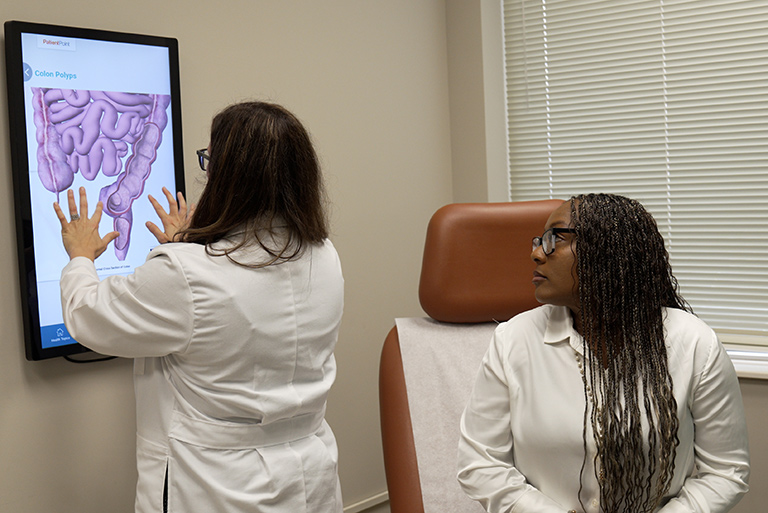
Local colorectal surgeon at Atrium Health Navicent, Dr. Lindsey Bridges, reiterates that lifestyle alone is not a great predictor of risk. Dr. Bridges said, “Unfortunately, there is a real trend of developing colon cancer or advanced colon polyps at ages younger than historically seen. Even patients who are otherwise healthy are not immune.
Our guidelines have been updated to reflect this new norm, recommending colon cancer screening starting at age 45 for all average risk patients. Patients with a family history of colon cancer will need to start screening sooner.”
This month, talk with your primary care physician to discuss when you should be screened. For more information, visit Atrium Health Navicent Specialty Center.